
Some divers still search for this under the country’s other name, East Timor diving: same reefs, same operators, same booking process either way.
Can’t decide where to start? The comparison below breaks down which coast suits which kind of diver.
| Choose | Best when you want | Keep in mind |
|---|---|---|
| Atauro Island | Reef walls and exceptional fish life | Boat logistics and currents |
| Dili coast | Easy shore access and macro life | Sites are spread along the coast |
| Both | The broadest diving experience | Allow several dive days |
Browse Atauro Island diving experiences and plan the right mix of reef, wall and shore dives.
Timor-Leste dive sites split into two distinct experiences, about an hour apart by boat. Most visiting divers do both.
| Atauro Island | Dili coast | |
|---|---|---|
| Diving style | Walls and reef diving | Shore-entry muck and macro diving |
| Known for | The reef-fish biodiversity record | Critters, nudibranchs, small stuff |
| Site count | 20+ named sites around the island | Handful of accessible shore sites |
| Signature sites | West coast walls, east coast fringing reefs | Pertamina Jetty, Dili Rock, Tasi Tolu |
| Typical dive cost | Not listed | Not listed |
| Best for | Reef and wall divers, wide-angle photographers | Macro photographers, critter hunters |
| Access | Boat from Dili (~1 hour) or fast ferry | Shore entry, no boat needed |
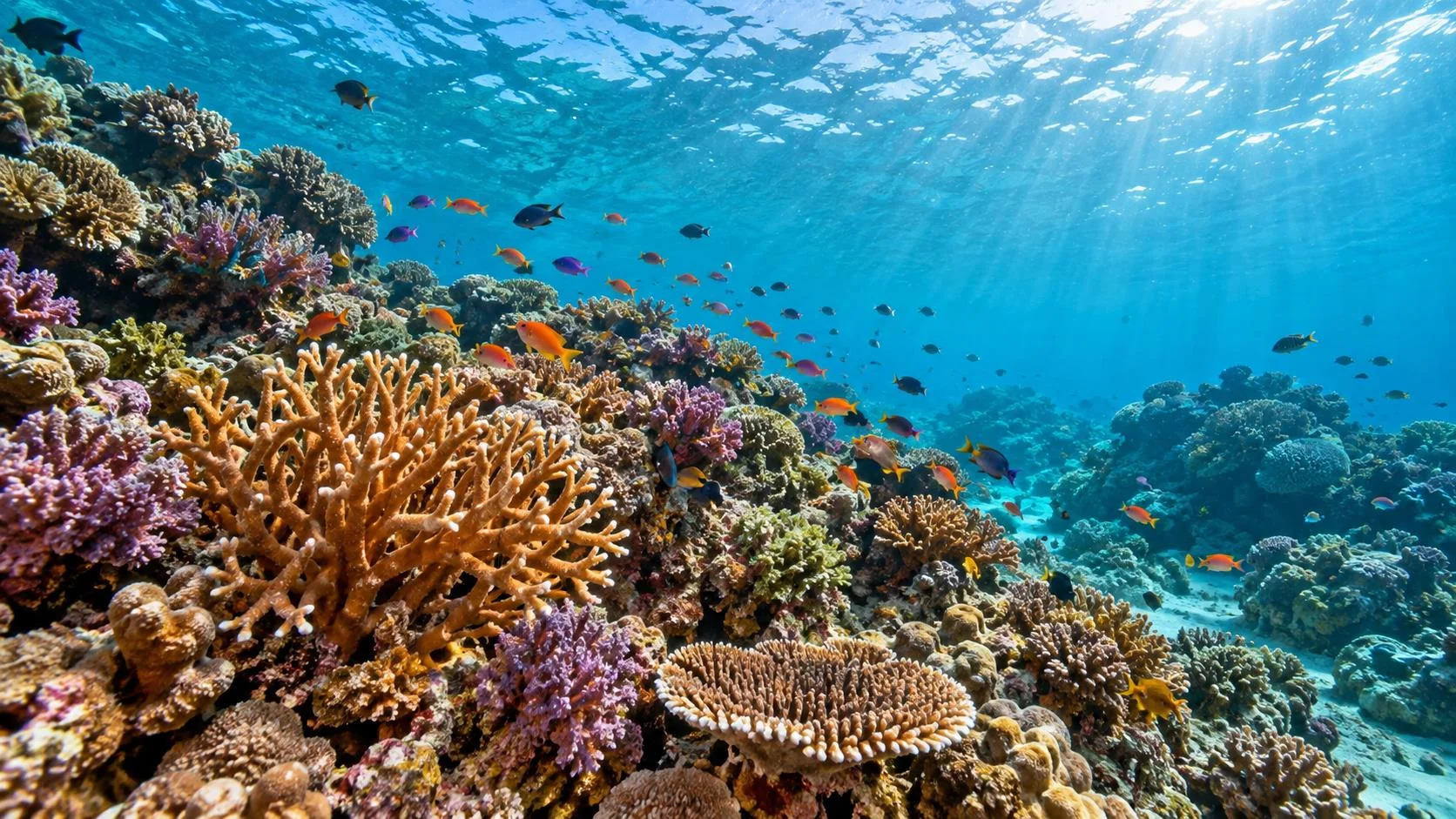
Reef people go to Atauro. The island’s west coast drops into steep walls; the east coast slopes more gently into fringing reef. Either way, you’re diving the same water that produced the highest average reef-fish count ever logged on a Conservation International Rapid Assessment survey, 253 species per site on average, with one site hitting 315, enough to edge out the previous record-holder, Indonesia’s Raja Ampat (Mongabay, 2016).
Macro people stay in Dili. Pertamina Jetty is the wreck dive you do when there’s no actual wreck, pylons and structure crawling with critters. Tasi Tolu is a flat sand-and-rubble muck site loaded with resident nudibranchs and photogenic oddities. Dili Rock mixes coral gardens with critter-hunting in one dive.
Honestly? Do both. Atauro for the numbers, Dili for the close-focus lens work. Most divers who try both come away saying the two coasts don’t compete, they complement each other.
Timor-Leste sits inside the Coral Triangle, the global centre of marine biodiversity that stretches from the Philippines down through Indonesia to the Solomon Islands. The region as a whole holds:
Atauro’s own numbers back that up directly: the 2016 Conservation International survey covered 10 sites over one week and recorded 642 reef fish species in total, an average of 253 per site, the highest average ever documented on a single Rapid Assessment Program survey (Mongabay; Phys.org).
Season: Timor-Leste is diveable year-round, but visibility is generally best from April to November, outside the wet-season runoff months.
Whale season: Between September and December, pygmy blue whales and other cetaceans migrate through the Ombai-Wetar Strait between Atauro and the mainland, one of the narrowest, deepest whale migration corridors in the world, at only around 20km wide with water dropping past 3km just offshore. Monitoring led by researchers at Charles Darwin University has tracked at least 500 pygmy blue whales passing through in a single season, alongside sperm whales and dolphins (ABC News, 2021). Some of that migration is visible from shore.
Most dive operators in Timor-Leste don’t have their own website, a functioning online booking system, or a way to take a card payment from overseas. That’s not a knock on them, it’s just where the local tourism infrastructure is at.
It’s also exactly why booking through us is different:
Certification: Diving Atauro or the Dili coast requires a minimum of an Open Water certification (or equivalent), the standard entry-level scuba qualification. A typical PADI Open Water course involves at least four training dives and certifies you to a maximum depth of 18 metres, with junior certifications available from age 10 under supervision (PADI). If you’re not certified, snorkelling tours cover both coasts and need no qualification at all.
Getting to Atauro: Boats and fast ferries run from Dili, typically in under an hour depending on the operator and sea conditions. Most dive operators either run their own transfer or work with the ferry schedule, so this is worth confirming at booking.
For accommodation, ferry timing and a fuller island overview, see our Atauro Island guide.
Readiness score: 0/4
Yes, by any objective measure. Atauro Island’s reefs recorded the highest average reef-fish diversity of any site surveyed by Conservation International’s Rapid Assessment Program, at 253 species per site on average across a 2016 survey. It sits inside the Coral Triangle alongside Raja Ampat and the Philippines, with far fewer divers in the water.
Pricing varies by operator, dive count and whether gear rental is included.
Yes, for scuba diving you need at least an Open Water certification or equivalent, which typically involves four training dives and a 18-metre depth limit. If you’re not certified, snorkelling tours at both Atauro and the Dili coast are open to everyone, with no qualification required.
Whale migration season runs from September to December, when pygmy blue whales and other cetaceans pass through the Ombai-Wetar Strait between Atauro and the Timor-Leste mainland. Researchers have tracked at least 500 pygmy blue whales moving through this corridor in a single season, one of the narrowest deep-water whale routes on the planet.
Atauro suits both. The east coast’s gently sloping fringing reefs are approachable for newly certified divers, while the west coast’s steeper walls give more experienced divers depth and drama. Many operators also run Discover Scuba or introductory sessions for people who aren’t yet certified.
Absolutely. Atauro’s shallow reef flats and the Dili coast’s accessible shore sites both offer strong snorkelling, especially given the same biodiversity that makes the scuba diving notable. It’s the easiest way to see the reef without a certification.