East Timor vs Timor-Leste vs Loro Sae: An Australian Guide to Southeast Asia’s Hidden Gem

If you’re an Australian looking for your next overseas adventure, there’s a good chance you’ve heard the names East Timor, Timor-Leste, or even Loro Sae used interchangeably. But are they actually different places, or simply different names for the same country? The answer is both fascinating and deeply connected to the nation’s history, culture, and identity. Understanding these names will not only help you navigate conversations with locals but also give you a greater appreciation for one of Southeast Asia’s youngest and most inspiring nations.
Just a short flight from Darwin, Timor-Leste remains one of the region’s best-kept secrets. It’s a destination where untouched beaches, world-class diving, rugged mountains, and centuries of history come together with the warm hospitality of its people. In this guide, we’ll explain the meaning behind East Timor, Timor-Leste, and Loro Sae, uncover the country’s remarkable journey to independence, and show why more Australians are choosing this hidden gem for an unforgettable travel experience.
What’s in a Name? East Timor, Timor-Leste, or Loro Sae?
If you’re an Aussie planning a trip to our northern neighbour, you might be wondering about the correct name to use. Is it East Timor or Timor-Leste? The answer reveals much about this young nation’s fascinating history and identity.
“Timor” itself comes from the Malay word “timur,” meaning “east” – a reference to the island’s position at the eastern end of the Lesser Sunda Islands. When Portuguese colonizers arrived in the 16th century, they added their own word for east – “Leste” – creating “Timor-Leste.” Meanwhile, English speakers typically referred to the region as “East Timor.”
A third name, ‘Loro Sae’ — meaning ‘rising sun’ in Tetun — is the traditional name preferred by some locals, particularly among older generations and those with strong ties to indigenous identity.
Today, “Timor-Leste” is the country’s official name and what the Timorese government calls itself. It’s also what the Australian government officially uses in diplomatic relations. The preference for “Timor-Leste” over “East Timor” has been growing steadily since independence, with usage increasing from just 4.5% in the 1990s to nearly 25% today.
For Timorese people, “Timor-Leste” represents more than just geography – it’s a powerful symbol of their hard-won sovereign identity after centuries of colonization and decades of occupation. When you visit, using “Timor-Leste” is a small but meaningful way to acknowledge the country’s journey to independence. And if you really want to impress a local, knowing that some still proudly call their homeland ‘Loro Sae’ will go a long way.
A Nation Born from Resilience: Timor-Leste’s Path to Independence
Just 450km north of Darwin lies one of the world’s youngest countries – a nation whose path to independence is one of the most remarkable stories of resilience in modern history.
Portuguese colonizers first settled on Timor in 1520, beginning nearly 500 years of foreign control. While the western half of the island eventually became part of Dutch-controlled Indonesia, the eastern portion remained under Portuguese rule until 1975. When Portugal suddenly withdrew that year, the Democratic Republic of East Timor declared independence on November 28.
This freedom was tragically short-lived. Just nine days later, neighboring Indonesia invaded, beginning a brutal 24-year occupation that would claim an estimated 180,000 Timorese lives – nearly a quarter of the population.
The 1991 Dili Massacre became a turning point when Indonesian forces killed between 180-200 peaceful protesters. Footage of the atrocity sparked international outrage and galvanized support for Timor-Leste’s independence movement, particularly in Australia.
After Indonesia’s President Suharto fell from power in 1998, his successor B.J. Habibie unexpectedly agreed to a referendum on independence. On August 30, 1999, despite intimidation and violence, an overwhelming 78.5% of Timorese voted for independence.
The aftermath saw devastating violence from pro-Indonesian militias, with widespread destruction and displacement. International peacekeepers, including many Australians, intervened to restore order. After a UN-supervised transition period, Timor-Leste finally achieved full independence on May 20, 2002.
Today, Timor-Leste stands as a testament to the unbreakable spirit of its people – a young democracy still healing, rebuilding, and defining its place in the world. The country adopted its new flag in 2002.
The People of Timor-Leste: A Cultural Tapestry
With a population of around 1.3 million, Timor-Leste’s identity is composed of many indigenous groups, each with its own language and cultural practices. The Tetun people are the largest group, making up approximately 25% of the population and living primarily around Dili, Suai, and Viqueque. Other significant groups include the Mambae (10%), Kemak, Bunak, and Fataluku. Their language, also named Tetun, gives the country one of its most cherished traditional names: Loro Sae meaning ‘rising sun’.
Timorese people are renowned for their incredible hospitality and warmth. Despite the hardships they’ve endured, you’ll find them to be gregarious and among the friendliest people you’ll ever encounter. Their society balances vibrant celebrations with conservative, traditional values centered on family, community, and religion.
While about 97-98% of Timorese identify as Roman Catholic (a legacy of Portuguese colonization), traditional animist beliefs continue to play an important role in everyday life. This fascinating blend of Catholic and animist traditions creates a unique spiritual landscape that’s evident in ceremonies, architecture, and daily practices.
The country’s cultural heritage is multi-layered – a fascinating combination of traditional Timorese, Portuguese, Chinese, and Indonesian influences that permeates local architecture, cuisine, clothing styles, and artistic endeavors. Don’t miss the opportunity to see traditional tais (hand-woven textiles) being created, or to witness cultural performances that showcase the country’s rich artistic traditions.
Nature’s Paradise: Timor-Leste’s Stunning Landscapes
Timor-Leste feels wonderfully untamed, with a wild natural beauty that in many places seems untouched by time. Lying climatically in the dry tropics, the landscape transforms dramatically as you travel around the country – from the damp southern plains to the cool mountain highlands and the dry northern coast.
The island’s rugged terrain reaches its peak at Mount Tatamailau, which soars to 2,963 meters (9,721 feet) at the center of a high plateau. Hilly areas are covered with fragrant sandalwood, while scrub and grass grow in the lowlands alongside coconut palms and eucalyptus trees. Between the beaches and headlands, mangroves dot the coastlines, providing crucial fish breeding habitats.
Wildlife enthusiasts will be rewarded with sightings of monkeys, spotted cuscus (a tree-dwelling marsupial), rusa deer, and over 240 bird species – including 23 that are found nowhere else on Earth. The country’s rich birdlife reflects its position at the crossroads of Asian and Australian biogeographical regions.
Underwater Wonderland: The Marine Life of Timor-Leste
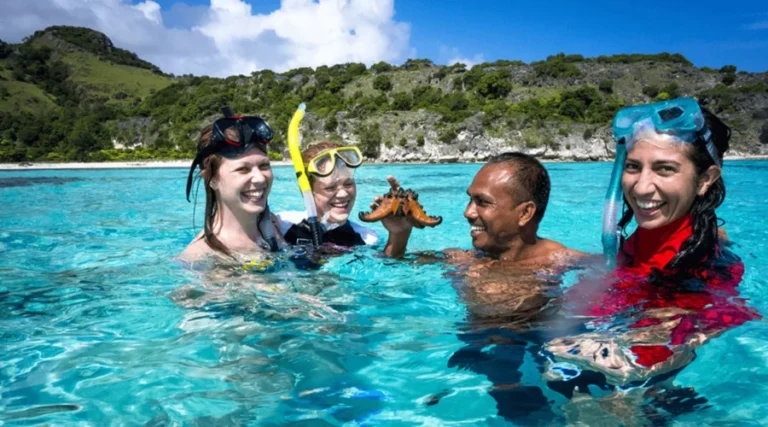
For many travellers, Timor-Leste’s greatest natural treasures lie beneath the waves. The country’s fringing reefs are pristine and boast extraordinary diversity, lying within the Coral Triangle – recognized as the global epicenter of marine biodiversity with 76% of the world’s coral species.
Atauro Island, easily accessible from Dili, was discovered in 2016 to have the most biodiverse waters in the world in terms of reef fish. Scientists from Conservation International found a staggering 642 marine species around the island, with up to 314 at a single site. With very few cars and only 8,000 inhabitants, Atauro offers a truly unique ecotourism experience.
Timor-Leste is also a global hotspot for whales and dolphins, which can be spotted year-round but especially during the migration season from October to December. During this time, the deep waters become a major route between the Pacific and Indian Oceans for many different species, including blue whales, killer whales, humpbacks, and numerous dolphin species.
It’s not uncommon during migration season to see whales and very large pods of dolphins both close to shore and from boats – an exhilarating, unforgettable experience that rivals any marine encounter in the world.
The Australian Connection: A Complex Relationship
For Australians, Timor-Leste holds a special place in our regional consciousness. Our nations share a complex history that includes Australia’s controversial recognition of Indonesia’s annexation in 1975, followed by our leading role in the peacekeeping mission that helped secure independence in 1999.
Today, just a 90-minute flight from Darwin, Timor-Leste offers Australians an opportunity to engage with a neighbor whose story is intertwined with our own. Many Timorese have strong connections to Australia, having sought refuge here during the occupation years or studied in Australian institutions.
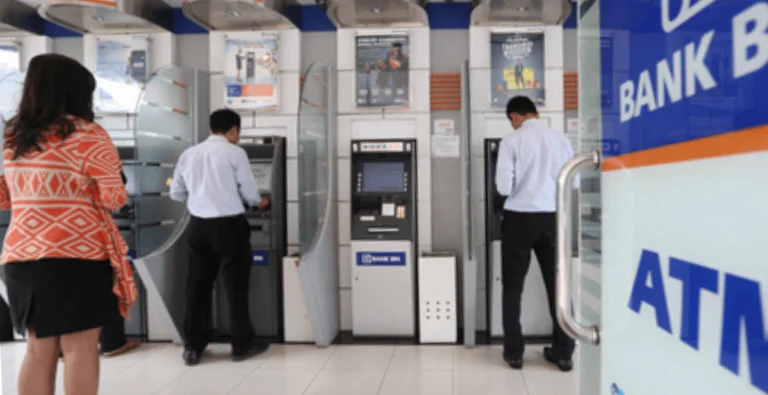
Australian travellers will find English widely understood in tourist areas, though learning a few phrases in Tetun will always be appreciated. The Australian dollar is accepted in many places (though the official currency is the US dollar), and you’ll find familiar Australian products alongside local goods in many shops.
Practical Tips for Australian Travellers
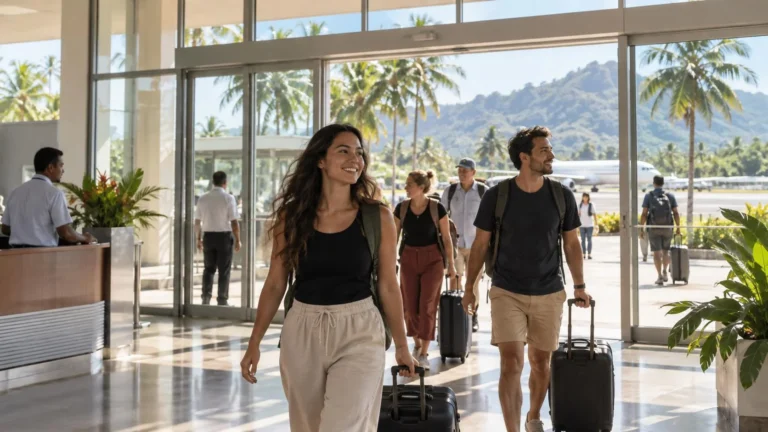
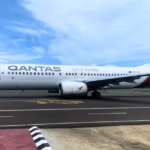
Getting There: Air North offers direct flights from Darwin to Dili several times weekly, making Timor-Leste one of the most accessible international destinations for Territorians. Flight time is approximately 1 hour and 20 minutes.
When to Go: The dry season (May to November) offers the most comfortable conditions for exploring, with June to August being particularly pleasant. The wet season (December to April) brings lush landscapes but can make some roads impassable.
Accommodation: Options range from basic guesthouses (US50-100) and a few luxury options (US$150+). In Dili, the Timor Plaza Hotel and Nova Bacau offer good value, while the Compass Dive Resort on Atauro Island provides a perfect base for underwater adventures.
Activities: Don’t miss snorkelling or diving in the pristine waters, hiking in the mountainous interior, exploring Portuguese colonial architecture in Dili, and purchasing traditional tais textiles directly from artisans.
Budget: While not as inexpensive as Bali, Timor-Leste offers good value. Budget travellers can get by on AU 50 – 8- per day, while mid-range travellers should budget AU 100-200 daily.
Why Visit Now?
Timor-Leste stands at a fascinating crossroads – developed enough to offer comfortable travel experiences but still wonderfully authentic and uncrowded. Unlike Bali’s tourist hotspots, here you’ll find pristine beaches without the crowds, dive sites teeming with marine life, and cultural experiences that feel genuinely connected to local life rather than staged for tourists.
By visiting, you’re not just witnessing a beautiful country – you’re contributing to its sustainable development and helping write the next chapter in its remarkable story. Your tourism dollars directly support local communities still building their economic foundation after decades of conflict.
For Australians seeking a meaningful travel experience just beyond our shores, Timor-Leste offers the perfect blend of adventure, cultural immersion, and natural beauty – all wrapped in the warm hospitality of a resilient people who’ve overcome extraordinary challenges to welcome you to their homeland.
Whether you call it East Timor, Timor-Leste, or Loro Sae, this young nation deserves a spot at the top of your travel bucket list. The only question is: what are you waiting for?